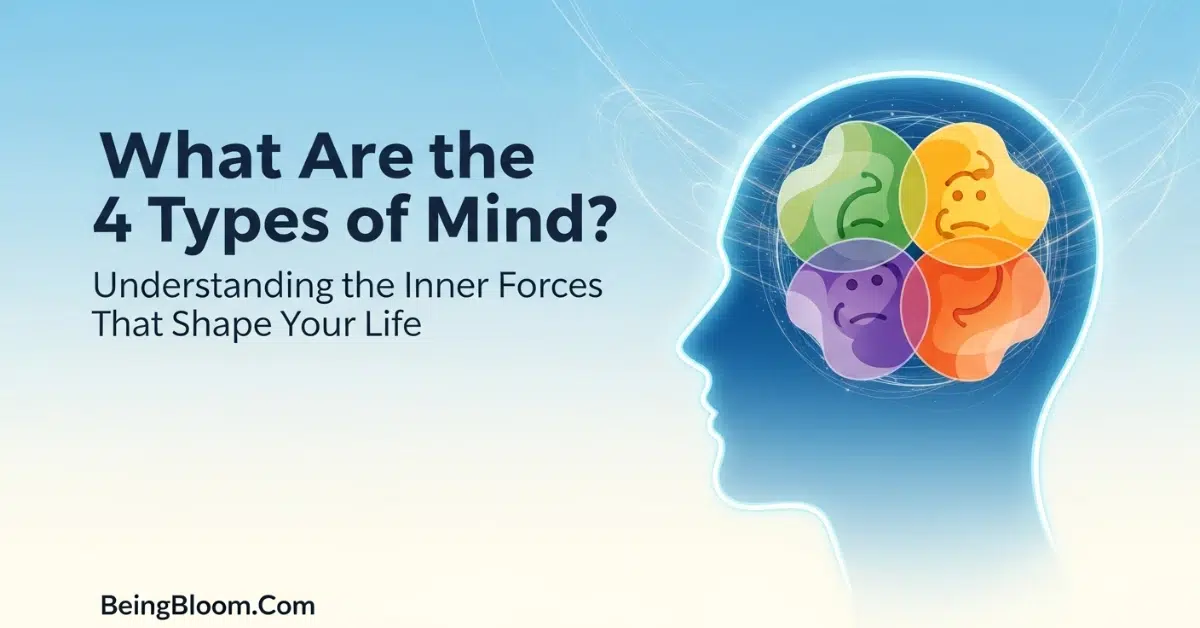
Your mind is not a single voice. It is a system. At different times, different aspects of your mind take over, determining how you react, what you fear, what you want, and what you believe is achievable. Most people go their entire lives without realizing which section of their brain is in control at any particular time. Ancient psychology and current science agree on one point: knowing the constitution of the mind is the first step toward mastering it. In general, human experience can be categorized into four sorts of minds. These are not hard categories, but rather functional layers that shape how you think and behave.
The Thinking Mind
This is the part of the mind responsible for analysis, judgment, comparison, and planning. It focuses on logic, language, memory, and reasoning. It enables you to solve issues, make decisions, and navigate a complex world. However, the thinking mind tends to overthink. It relives the past, frets about the future, and invents imagined difficulties. When this thought dominates, life becomes weighty and noisy. The thinking mind is an effective tool, but a dreadful master.
The Emotional Mind
The emotional mind reacts before reasoning may speak. It works through emotions such as fear, want, wrath, love, and attachment. This mind evolved to protect you, not to make you happy. When the emotional mind is in control, reactions seem automatic. Words are spoken before they are thought out. Decisions are taken to prevent discomfort rather than to increase clarity. Ignoring this mentality won’t work. Understanding does.
The habitual mind
This mind functions on autopilot. It saves habits, routines, attitudes, and behaviors that no longer require conscious thought. This is why you can drive, eat, and scroll without remembering how you got started. The habitual mind saves energy, but it also traps people in cycles of negative thinking, poor coping, and repeated mistakes. Change is difficult not because you are weak, but because habit is powerful.
The Observing Mind
This is the quietest and most underappreciated aspect of the intellect. The watching mind observes thoughts and feelings without being drawn into them. It adds gap between stimuli and response. When this mind is active, clarity arises. You stop reacting impulsively and start making deliberate choices. This mind does not make judgments. It notices.
How These Minds Interact.
Most inner conflict occurs when the cognitive and emotional minds disagree, while the habitual mind quietly repeats old behaviors. The observant mind is what creates balance. It enables awareness to interrupt impulse. You do not eradicate any of these minds. You learn how to synchronize them. Thinking helps you plan. Emotion helps you connect. Habits help you function. Observation helps you remain free.
Why Awareness Changes Everything.
You don’t get control by fighting your thinking. You obtain control by determining which mentality is active. When you observe an increase in rage, this is the emotional mind speaking. When you find yourself sliding into concern, the thinking mind has seized control. The instant you observe, you reclaim control. You aren’t your thoughts. You aren’t your emotions. Your habits do not define who you are. You are the consciousness that understands them. When the observant mind gets powerful, the rest of the mind works with you rather than against you. And that is the start of true mental freedom.