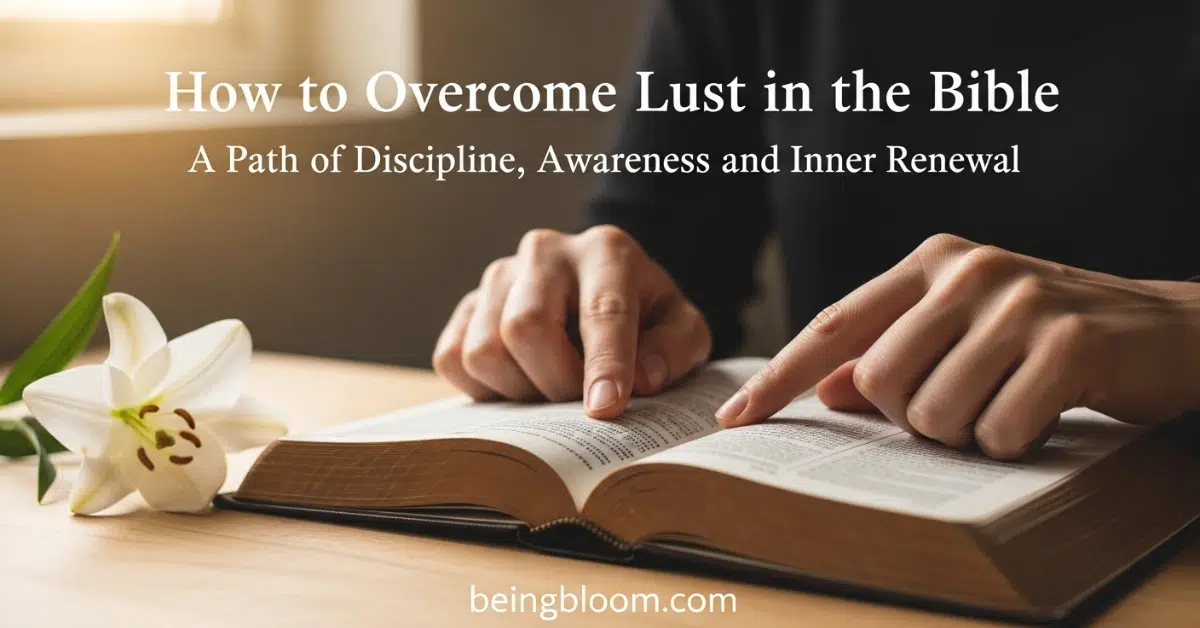
Lust is not taken lightly in the Bible. Not because want is inherently evil, but because unrestrained desire quietly seizes control of the mind. Lust, according to the Bible, is a heart problem—a disturbance of attention, intention, and identity—rather than a moral failure. It redirects human desire rather than shaming it. To understand how the Bible teaches conquering lust, we must go beyond the rules. We need to comprehend the psychology of temptation, distraction, and inner conflict.
Lust begins in the heart and not the body.
In the Gospel of Matthew, Jesus states that “anyone who looks at a woman lustfully has already committed adultery with her in his heart.” This is a powerful biblical insight on lust. This remark isn’t about punishment.
It is all about awareness.
The Bible explains that lust does not begin with action. It all starts with attention. The mind focuses, imagines, repeats, and strengthens a desire until the body follows.
The actual battleground is not behavior.
It’s the inner life.
Understanding Lust: Misplaced Hunger
In biblical terms, lust refers to more than just sexual desire. It’s want without wisdom. The Bible consistently demonstrates that humans are motivated by hunger—for connection, meaning, comfort, and validation. When these underlying needs are unsatisfied or disregarded, desire becomes linked to pleasure.Lust becomes a shortcut. A brief respite from loneliness, tension, boredom, or emptiness. Scripture does not forbid desire. It poses a more challenging question: what are you truly yearning for?
The Role of the Mind in Temptation
In terms of temptation, the Bible is shockingly psychological.James states that temptation occurs when desire is “dragged away and enticed.” Language is important. Lust does not strike suddenly. It pulls slowly, using imagination, repetition, and justification. That is why the Bible places such emphasis on mental renewal. Transformation does not occur through repression alone. It stems from altering what the mind feeds on—images, thoughts, conversations, and habits. What you repeatedly ingest eventually takes control of you.
Protecting the Eyes and Attention
The Bible frequently mentions eye guarding—not as repression, but as a discipline of focus. Job famously claimed that he formed a vow with his eyes. This was not fear-based control. It was self-respect. Wherever focus goes, energy follows. When the eyes are continuously aroused, the mind becomes restless. Restlessness fuels passion. Biblical wisdom emphasizes that discipline does not limit life, but rather stabilizes it.
Fleeing is not weakness—it is wisdom.
One of the Bible’s most practical instructions on lust is straightforward: flee.Paul does not say, “Debate with lust or negotiate with it.” He tells you to run. Lust is persistent, not unbeatable. The Bible understands human psychology well enough to recognize that willpower weakens with prolonged exposure. Spiritual strength might sometimes take the form of remoteness rather than conflict.
Replacing Lust, Not Simply Resisting It
The Bible rarely preaches passive resistance. It teaches replacement.
Paul encourages believers to focus on what is real, pure, and noble. Why? Because the mind cannot remain empty. If lust is removed without purpose, it will return stronger. Prayer, service, meaningful employment, and authentic relationships are not distractions. They are redirections of desire toward something long-lasting.
The Bible’s strategy is not famine, but food.
Identity Matters More Than Rules.
One of the Bible’s most profound teachings is that action follows identity.
The scripture does not state, “Stop lusting so you can be worthy.” It reads, “You are valued—live accordingly.” Lust reigns supreme when a person perceives themselves as nothing more than a collection of desires. Desire is lost when people see themselves as someone with dignity, duty, and purpose.
Overcoming lust does not need fighting yourself.
It is about remembering who you are.
Grace, not guilt, causes change.
The Bible is clear on one point: shame does not heal lust.Guilt confines the mind in a circle of want, indulgence, remorse, and repetition. Grace interrupts the pattern by taking self-hatred out of the equation. Grace does not excuse behavior. It makes room for honesty. When a person ceases concealing, growth occurs.
The Long-term Biblical Path
The Bible does not guarantee rapid liberation from lust. It promises transformation over time. That transformation is achieved by awareness, discipline, community, and inner regeneration. It’s slow, practical, and really human. Lust fades not when desire is crushed, but when life becomes important enough to make cheap pleasure less appealing.
The Core Biblical Message
The Bible doesn’t teach you to despise desire.
It teaches you how to master it. Lust limits life to the now. Wisdom extends it beyond the impulse. When desire is directed by clarity, love, and purpose, it ceases to be a burden and instead becomes energy for a more fulfilling existence. And this, according to the Bible, is true freedom.